
DevOps
Our DevOps services empower you to streamline your software development lifecycle, from code commit to deployment, enabling you to respond quickly to market demands and deliver exceptional value to your customers.
Comprehensive DevOps Services Tailored to Your Needs
Our DevOps Services
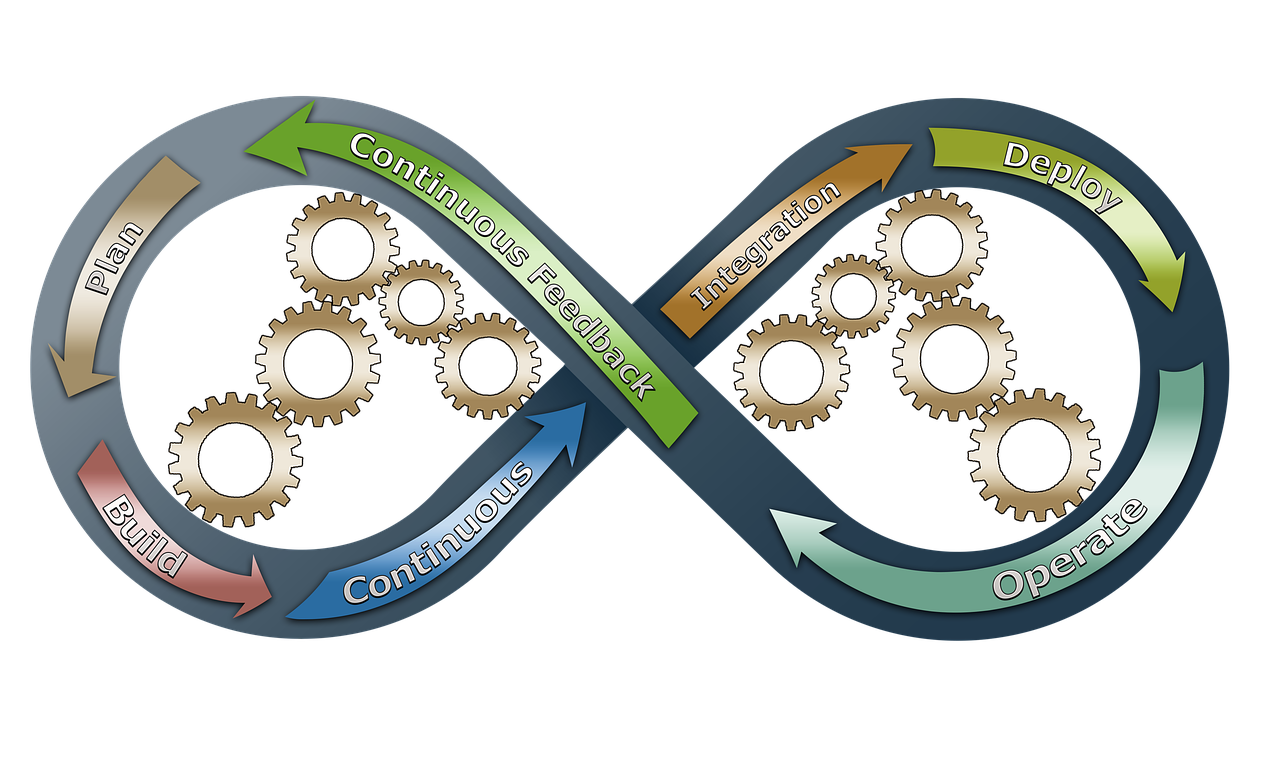
DevOps is not just a set of tools; rather, it represents a cultural shift that unites development and operations teams. Essentially, it promotes collaboration by emphasizing automation, continuous integration, and continuous delivery (CI/CD) to speed up software development and deployment cycles. In other words, it focuses on breaking down silos, enhancing communication, and fostering shared responsibility throughout the entire software lifecycle.

DevOps Consulting
Initially, we assess your current environment, identify pain points, and develop a customized strategy aligned with your business goals. Furthermore, we collaborate with you to design a roadmap for implementation and adoption.

Cloud Migration & Management
Moreover, we assist in migrating your applications and infrastructure to the cloud while providing ongoing management to ensure optimal performance, security, and cost efficiency.

CI/CD Pipeline Automation
Notably, we design and implement automated CI/CD pipelines to streamline your build, test, and deployment processes. This reduces manual effort and accelerates release cycles.

Monitoring & Logging
Furthermore, we implement comprehensive monitoring and logging solutions to provide real-time visibility into your application and infrastructure performance.
DevOps and QA: A Powerful Partnership for Quality
DevOps significantly transforms QA and software testing by embedding testing throughout the entire development lifecycle. Instead of being a separate phase at the end, testing becomes an integral part of the CI/CD pipeline.

Shift-Left Testing
First of all, DevOps enables shift-left testing, where testing activities are performed earlier in the development process. Because of this, developers can identify and fix defects sooner, reducing the cost and effort of remediation.

Automated Testing
Next, automated unit tests, integration tests, and end-to-end ensure code quality and prevent regressions. Automated Testing allows QA teams to increase efficiency and focus on more complex test cases.
Continuous Testing
Following automation, DevOps promotes continuous testing, where tests are executed automatically as part of the CI/CD pipeline. As a result, this provides rapid feedback on code changes, allowing developers to identify and resolve issues quickly.

Performance Testing
Also, DevOps enables performance testing throughout the development lifecycle. Performance tests can be automated and integrated into the CI/CD pipeline to ensure that applications meet performance requirements.

Collaboration
And finally, all of this fosters collaboration between developers, testers, and operations teams. For this reason, testers can work closely with developers to understand code changes and develop effective test strategies.
Ready to improve software reliability while accelerating delivery?
Check Out How to Achieve Quality at Speed with DevOps and QA Synergy
DevOps Frequently Asked Questions
What is DevOps?
Essentially, DevOps is a collaborative methodology and cultural philosophy focused on unifying software development (Dev) and IT operations (Ops) to accelerate the software delivery lifecycle. Moreover, it emphasizes automation, continuous integration, and continuous delivery (CI/CD) to achieve faster release cycles, improved software quality, and enhanced collaboration. Therefore, think of it as a holistic approach to building and deploying software faster and more efficiently.
How can DevOps benefit my organization?
Primarily, DevOps brings numerous advantages. For example, it accelerates time-to-market, improves software quality, reduces costs through automation and efficiency, enhances collaboration between teams, and increases overall agility. In short, by adopting DevOps practices, organizations can respond more quickly to market demands, deliver better products, and gain a competitive edge.
What tools and technologies do you use?
Firstly, we leverage a wide range of industry-leading DevOps tools and technologies. Specifically, this includes CI/CD tools (e.g. Jenkins); cloud platforms (e.g. AWS); containerization technologies (e.g. Docker and Kubernetes); and monitoring tools (e.g. Datadog and ELK Stack). However, the specific tools we use always depend on the client’s individual needs and environment.
How long does it take to implement DevOps?
Generally speaking, the timeframe for implementing DevOps varies depending on the organization’s size, complexity, and existing infrastructure. Typically, a phased approach is recommended, starting with a DevOps assessment and strategy development, followed by pilot projects and gradual adoption of DevOps practices. In practice, a full-scale DevOps transformation can take anywhere from a few months to a year or more.
What is the cost of DevOps services?
Naturally, the cost of DevOps services depends on the scope of the engagement, the specific services required, and the duration of the project. For instance, we offer flexible pricing models, including hourly rates, project-based fees, and managed services. In any event, the best way to determine the cost for your specific needs is to request a free consultation and receive a customized quote.
How do I get started with DevOps?
Initially, the best way to start with DevOps is to contact us for a free consultation. Subsequently, we’ll assess your current environment, identify your pain points, and develop a customized DevOps strategy tailored to your business goals. Consequently, we’ll guide you through the implementation process, providing expert guidance and support every step of the way.